Aeroponics
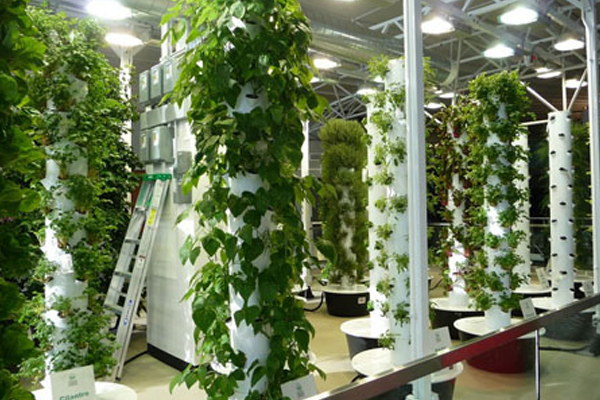
Aeroponics is a cutting-edge agricultural method where plants are grown without soil by suspending their roots in an enclosed environment and intermittently misting them with a nutrient-rich water solution. Because the roots dangle freely, they have maximum exposure to oxygen, which accelerates cellular respiration, photosynthesis, and overall plant growth. It is considered one of the most efficient and technologically advanced forms of Controlled Environment Agriculture (CEA).
Key Benefits:
Extreme Efficiency: Aeroponic systems use roughly 95% less water than traditional soil farming, as the closed-loop system captures and recycles water.Space Optimization: Vertical stacking allows growers to yield up to three times as much produce as soil-based farming on a fraction of the land.
Pest and Disease Reduction: Because there is no soil and the system is isolated, the risk of soil-borne diseases and pests is virtually eliminated.
Types of Aeroponic Systems:
Low-Pressure Aeroponics (LPA): Often used in home or DIY setups. It utilizes standard water pumps and spray emitters to deliver slightly larger nutrient droplets.High-Pressure Aeroponics (HPA): Typically used in commercial settings. It uses high-pressure pumps and pressure tanks to atomize the water into a very fine mist. This fine mist maximizes nutrient absorption but requires highly soluble nutrients to avoid clogged nozzles.
Ultrasonic Aeroponics: Uses piezoelectric transducers to create an ultra-fine, nutrient-dense fog.
Limitations and Challenges:
High Initial Setup Costs: Purchasing automated pumps, timers, and specialized misting components can be expensive.Maintenance Intensive: The nozzles require constant monitoring and regular cleaning to prevent clogging from mineral buildup.
Technical Dependency: The plants are highly dependent on the system. If a power outage or equipment failure occurs, the suspended roots can dry out and die very quickly.
Anjan Associate, All right reserved.
Designed By Helloweb
